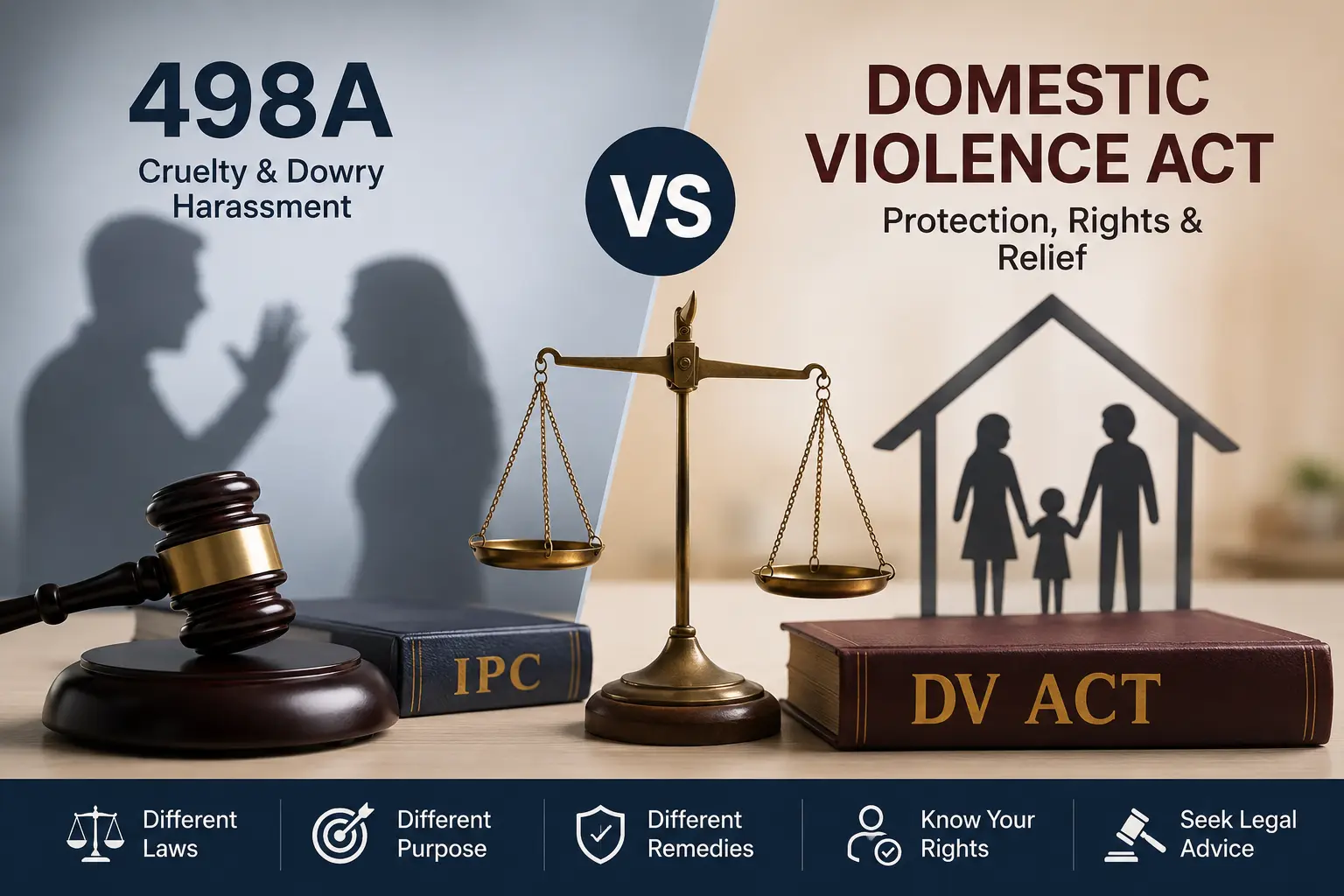
Marriage is built on trust, respect, and mutual support. However, when a married woman faces cruelty, harassment, or unlawful dowry demands, Indian law provides legal protection. One of the most well-known legal provisions for such situations is Section 498A of the Indian Penal Code (IPC). Following the implementation of the Bharatiya Nyaya Sanhita (BNS), protections against cruelty to a married woman continue under the new criminal law framework.
A complaint involving Section 498A can have serious legal consequences for everyone involved. It may lead to criminal proceedings, bail applications, family disputes, maintenance claims, or divorce proceedings. Understanding your rights, responsibilities, and the legal process is essential before taking any action.
This guide explains what Section 498A is, when it applies, how the FIR process works, the rights of both spouses, the role of evidence, bail provisions, and practical legal remedies.
What Is Section 498A?
Section 498A was introduced to protect married women from cruelty by their husband or the husband's relatives. The law aims to address situations where a woman is subjected to physical or mental cruelty, particularly when it is connected with unlawful demands for dowry.
Cruelty may include physical violence, repeated verbal abuse, serious mental harassment, intimidation, or conduct that causes grave emotional or physical suffering. Courts examine the specific facts and evidence of every case before reaching a conclusion.
What Is Considered Cruelty?
Not every marital disagreement amounts to cruelty under the law. Courts generally look at the nature, seriousness, frequency, and impact of the alleged conduct.
Examples that may be considered cruelty include:
Physical assault or repeated violence.
Continuous mental harassment or humiliation.
Threats intended to cause fear or emotional distress.
Persistent unlawful demands for money, property, or expensive gifts.
Harassment linked to dowry demands.
Conduct that seriously affects the physical or mental well-being of the spouse.
Whether particular conduct amounts to cruelty depends on the facts and evidence presented before the court.
Dowry Harassment and Section 498A
Dowry-related harassment remains one of the primary reasons why Section 498A cases are filed. If a woman is allegedly pressured to bring money, jewellery, property, or other valuable items from her family after marriage, the law may provide criminal remedies depending on the circumstances.
Every allegation must ultimately be examined through evidence and the applicable legal process.
How Is a 498A FIR Registered?
If a person believes that cruelty or dowry harassment has occurred, a complaint may generally be made before the appropriate police authority. Depending on local procedures, complaints may also be examined by specialized women's cells before further legal action is taken.
After receiving the complaint, the authorities assess the allegations and proceed according to law. Registration of an FIR does not by itself determine guilt or innocence. It marks the beginning of the investigation process.
Is Arrest Automatic in Every 498A Case?
No.
Courts have emphasized that arrests should not be made mechanically merely because a complaint has been registered. Investigating authorities are expected to follow legal safeguards and assess the facts before taking coercive action.
This approach seeks to protect genuine victims while also safeguarding individuals from unnecessary arrests.
Can an Accused Apply for Bail?
Yes. Depending on the circumstances, legal remedies such as anticipatory bail or regular bail may be available.
While considering bail, courts may examine factors such as:
The nature of the allegations.
Available evidence.
Cooperation with the investigation.
Possibility of influencing witnesses.
Overall facts of the case.
Every bail application is decided on its own merits.
Rights of the Wife
A woman alleging cruelty may have access to several legal remedies depending on the facts of her case. These may include criminal proceedings, protection under applicable domestic violence laws, claims for maintenance where legally permissible, residence-related relief, or appropriate matrimonial remedies.
The exact legal options available vary from case to case and should be discussed with a qualified advocate.
Rights of the Husband
Being named in a complaint does not automatically establish guilt. Every accused person has legal rights, including the opportunity to defend the allegations through due process.
Depending on the circumstances, legal options may include:
Seeking anticipatory bail.
Applying for regular bail where appropriate.
Presenting documentary and electronic evidence.
Challenging legally unsustainable proceedings before the appropriate court where permitted by law.
Defending the matter during investigation and trial.
Each case depends upon its own facts, evidence, and judicial findings.
What If the Allegations Are False?
Courts have recognized that while laws protecting women serve an important social purpose, every allegation must still be examined on the basis of evidence.
Where a person believes that allegations are false or exaggerated, legal remedies may be available depending on the facts of the case. These may include seeking bail, producing documentary evidence, relying on electronic records, presenting witness testimony, or approaching the appropriate court where legally justified.
Individuals should avoid making decisions solely on advice from social media or informal sources and instead obtain professional legal guidance.
Evidence Commonly Used in 498A Cases
Evidence often plays a decisive role in matrimonial disputes.
Depending on the circumstances, relevant evidence may include:
WhatsApp conversations.
Emails.
Text messages.
Audio or video recordings where legally admissible.
Medical reports.
Photographs.
Bank statements.
Financial transaction records.
Witness testimony.
Marriage-related documents.
Previous complaints or correspondence.
Courts evaluate both oral and documentary evidence before reaching any conclusion.
Can a 498A Case Be Settled?
Some matrimonial disputes are resolved through negotiation or mediation where legally permissible. In suitable cases, parties may choose to settle their disputes and pursue further legal remedies available under the law.
However, not every case is appropriate for settlement. The suitability of mediation depends upon the facts, the wishes of the parties, and the applicable legal framework.
Common Mistakes to Avoid
Whether you are the complainant or the accused, the following mistakes can complicate a legal matter:
Ignoring police notices or court proceedings.
Destroying or altering evidence.
Threatening the opposite party.
Posting details of the dispute on social media.
Signing settlement documents without legal advice.
Delaying consultation with an experienced advocate.
Early legal guidance often helps individuals understand their options and avoid procedural errors.
When Should You Consult a Lawyer?
Legal advice should be considered as early as possible if:
You are facing allegations of cruelty.
You have received a police notice.
An FIR has been registered.
You fear arrest.
You are experiencing dowry-related harassment.
You are considering filing a complaint.
You need advice regarding bail or investigation.
You want to understand your legal rights before taking any action.
Prompt legal guidance can help you understand the process, preserve relevant evidence, and make informed decisions.
Conclusion
Cases involving allegations of cruelty under the law are legally and emotionally significant. Every dispute has its own facts, evidence, and legal complexities. Neither assumptions nor online opinions should replace professional legal advice.
Whether you are seeking protection from harassment or defending yourself against allegations, understanding the legal process and obtaining timely guidance can make a substantial difference.
If you need advice regarding a matrimonial dispute, cruelty allegations, bail, or your legal rights, consulting an experienced advocate can help you understand the options available in your specific situation.
Frequently Asked Questions
Is Section 498A still relevant after the Bharatiya Nyaya Sanhita?
Yes. Legal protection against cruelty to a married woman continues under the current criminal law framework, although statutory provisions have been reorganized.
Can anticipatory bail be granted in a 498A matter?
Depending on the facts and judicial discretion, anticipatory bail may be available.
Is every family member automatically liable?
No. Courts generally require specific allegations and supporting material before determining individual liability.
Can electronic evidence be used?
Electronic records such as messages and emails may be relied upon subject to the applicable rules governing admissibility.
Can matrimonial disputes be resolved through mediation?
In appropriate cases, parties may choose mediation or settlement where legally permissible. Need legal guidance?
If you are facing a Section 498A matter—whether you wish to file a complaint, respond to allegations, understand bail options, or explore your legal remedies—consulting an experienced advocate can help you make informed decisions based on your specific circumstances.
Book an online consultation with a verified advocate, securely share your documents before the session, and receive personalized legal guidance tailored to your case.